
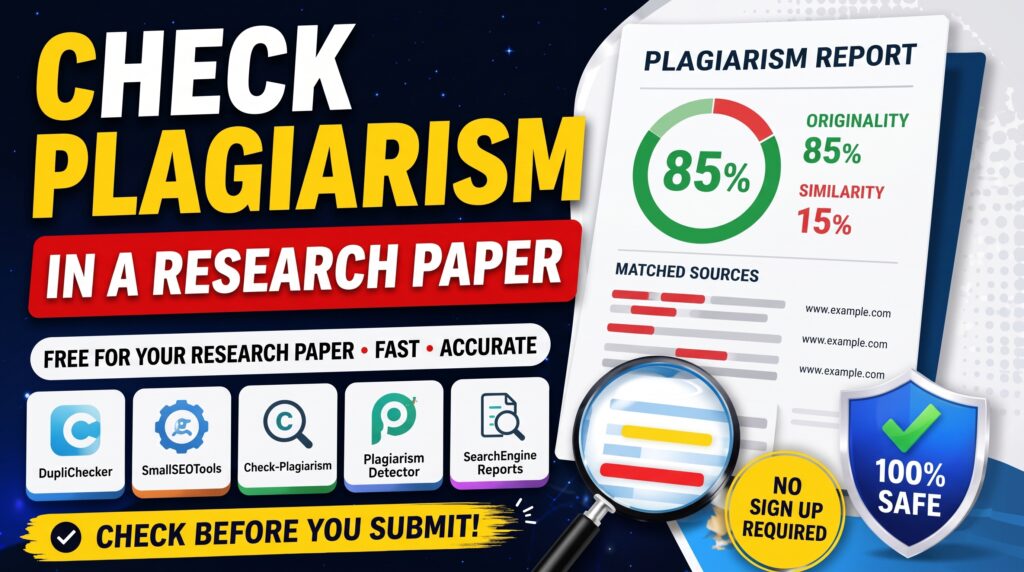
Plagiarism is one of the most serious concerns in academic publishing, and even unintentional similarity to existing work can lead to rejection or damage to a researcher’s reputation. Knowing how to properly conduct a plagiarism check for a research paper before submission is an essential step that every author should take seriously. This guide explains why plagiarism checks matter, how they work, and the best practices for ensuring your manuscript is fully original before it reaches a journal editor.
Why Plagiarism Checks Are Essential
Academic journals take originality extremely seriously, and most reputable publishers use plagiarism detection software as a standard part of the editorial process. A manuscript flagged for high similarity, even if unintentional, can be immediately rejected or, in serious cases, lead to broader academic consequences for the author. Beyond avoiding penalties, running a plagiarism check for your research paper protects your academic integrity and reinforces the credibility of your original contribution to the field.
Common Causes of Unintentional Plagiarism
Plagiarism is not always deliberate. It often happens when researchers paraphrase source material too closely without sufficiently changing sentence structure or wording, reuse portions of their own previously published work without proper citation (known as self-plagiarism), forget to cite a source after taking notes from multiple references, or rely heavily on boilerplate language in the methods section that closely resembles other papers. Being aware of these common pitfalls helps authors write more carefully from the very first draft.
Popular Plagiarism Detection Tools Used by Journals
- Turnitin: Widely used by universities and journals, comparing submissions against academic databases, publications, and web content.
- iThenticate: A tool specifically designed for scholarly and research content, commonly used by academic publishers.
- Similarity Check (Crossref): Integrated into many journal submission systems to screen manuscripts before peer review.
- Grammarly Premium: Offers a general plagiarism check suitable for early self-review, though less specialized for academic databases.
Step-by-Step Guide to Checking Plagiarism Before Submission
Begin by running your complete manuscript, including the abstract, introduction, methodology, and discussion sections, through a reliable plagiarism detection tool rather than checking sections in isolation. Carefully review the similarity report, paying attention not just to the overall percentage but to where the flagged matches occur; matches in the references section or standard technical phrases are generally less concerning than matches within your original analysis or discussion. Revise any flagged passages by substantially rewriting them in your own words and adding proper citations where appropriate, rather than making only minor word swaps. Finally, run a second check after revisions to confirm the similarity score has been reduced to an acceptable level, typically below the threshold specified by your target journal.
What Similarity Percentage Is Acceptable?
There is no single universal threshold, since acceptable similarity varies by journal and discipline. However, many journals consider an overall similarity score below fifteen to twenty percent, excluding references and standard phrases, to be reasonable, while anything significantly higher raises red flags for editors. It is always best to check your target journal’s specific plagiarism policy, as some fields with highly standardized methodology sections may have different expectations than others.
Best Practices to Avoid Plagiarism From the Start
The most effective way to avoid plagiarism issues is to build good habits from the beginning of the writing process. Keep detailed and organized notes of every source you reference during your literature review, always paraphrase in your own words rather than lightly editing original sentences, and cite consistently using your target journal’s required referencing style. When quoting directly, use quotation marks and proper attribution, and be mindful of self-plagiarism by properly citing your own previously published work rather than reusing large sections without acknowledgment.
What Happens If Plagiarism Is Detected After Submission?
If a journal’s editorial team detects significant similarity after submission, the manuscript is typically returned to the author with a request for revision, or in more serious cases, rejected outright without further review. If plagiarism is discovered after publication, consequences can be far more severe, including formal retraction of the paper, notification to the author’s institution, and long-term damage to professional reputation. This makes it far safer and more efficient to catch and resolve any similarity issues before submission rather than risk these outcomes later.
Frequently Asked Questions – FAQs
Does a high similarity score always mean plagiarism?
Not necessarily. Similarity reports often flag properly cited quotations, standard technical phrases, or common methodology descriptions that are not true plagiarism. Reviewing the context of each flagged match is essential before assuming intentional wrongdoing.
Is self-plagiarism really a serious issue?
Yes. Reusing substantial portions of your own previously published work without proper citation or permission is considered a form of academic misconduct by most journals and can lead to rejection or retraction, even though the original content was your own.
Which plagiarism checker do most journals actually use?
Many major academic publishers rely on iThenticate or Similarity Check powered by Crossref, both of which compare submissions against extensive databases of scholarly publications, making them more rigorous than general-purpose plagiarism tools.
Conclusion
A thorough plagiarism check for your research paper is not just a formality; it is a critical safeguard for your academic integrity and the credibility of your work. By understanding common causes of unintentional plagiarism, using reliable detection tools, and following best practices throughout the writing process, researchers can submit manuscripts with confidence, knowing their work is original and ready for a fair, unbiased review. Taking this step seriously before submission can save significant time, protect your reputation, and improve your overall chances of publication success.